
Before formal lessons: a calm reading routine for bilingual families
A bilingual home may contain several languages, several writing systems and very different expectations about what early reading should look like. Before choosing an activity, name the language and the next small goal. Among school-readiness books, the two resources discussed here concern Russian literacy. They offer a starting point for a family conversation about reading and writing, with room to notice the individual learner.
Find out what is already familiar
Ask the child to show something they recognise on a page: a letter, a word or a picture connected with the text. This opening is an observation, not a test of everything they know. It helps the adult avoid beginning with an assumption about the child’s level based only on age or confidence in another language.
The primer Букварь by N. S. Zhukova introduces reading for preschool learners through the author’s approach to early literacy. Its description highlights clear tasks and illustrations. Before using a page, look at the instruction and consider how much explanation the learner will need in order to understand the activity itself.
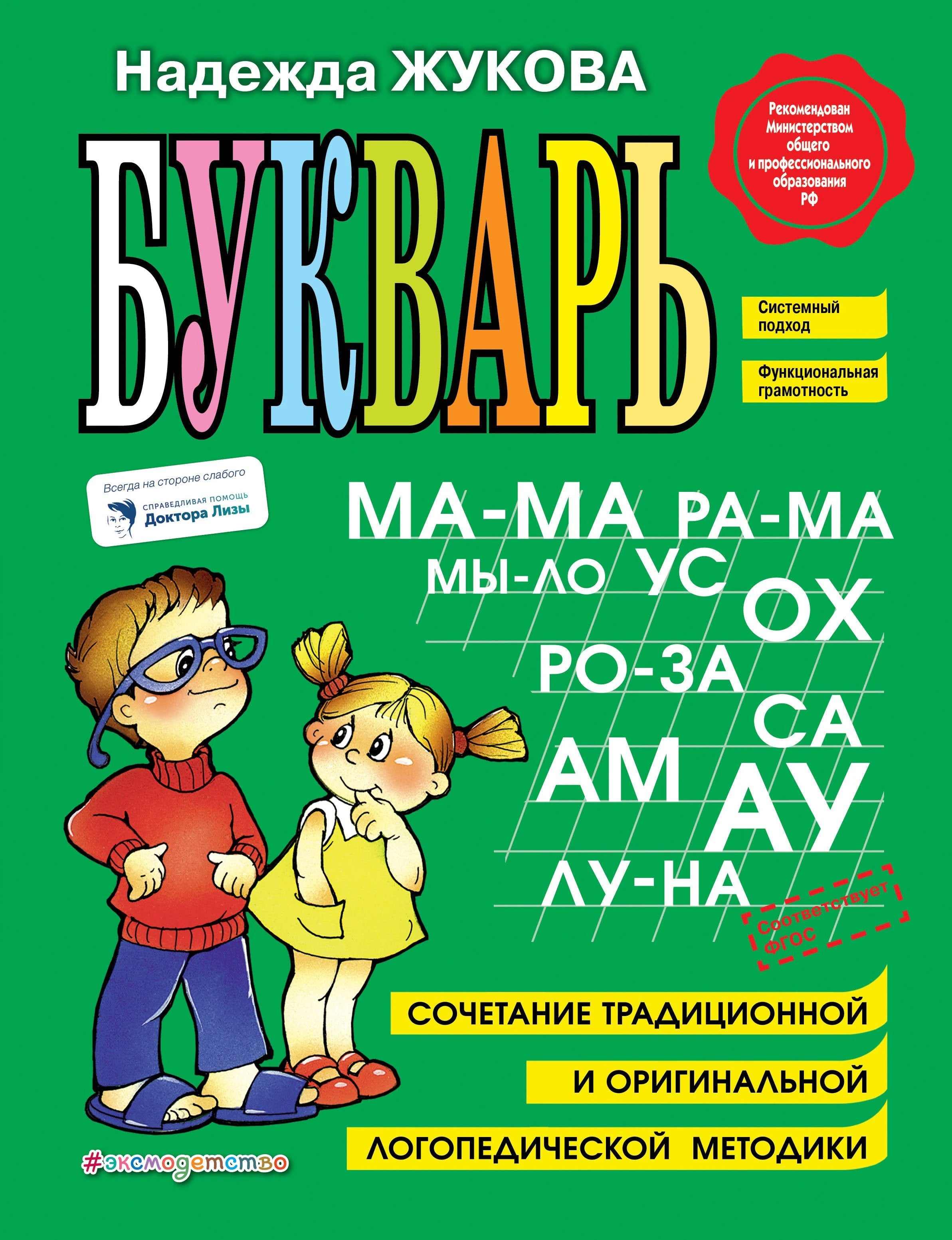
Use the language that makes the instruction clear, while keeping the actual reading task identifiable as Russian. A family may discuss a picture in English and then return to the printed Russian material. That does not turn the book into an English course; it simply describes how adults and children can make sense of a shared page.
Writing introduces another kind of task
Уроки чистописания и грамотности: обучающие прописи offers handwriting and literacy exercises for beginners and children who already read but want further writing practice. The description includes letter formation, spelling and punctuation. These are several possible aims, so choose a particular exercise instead of assuming that completing a whole spread is always the most useful goal.
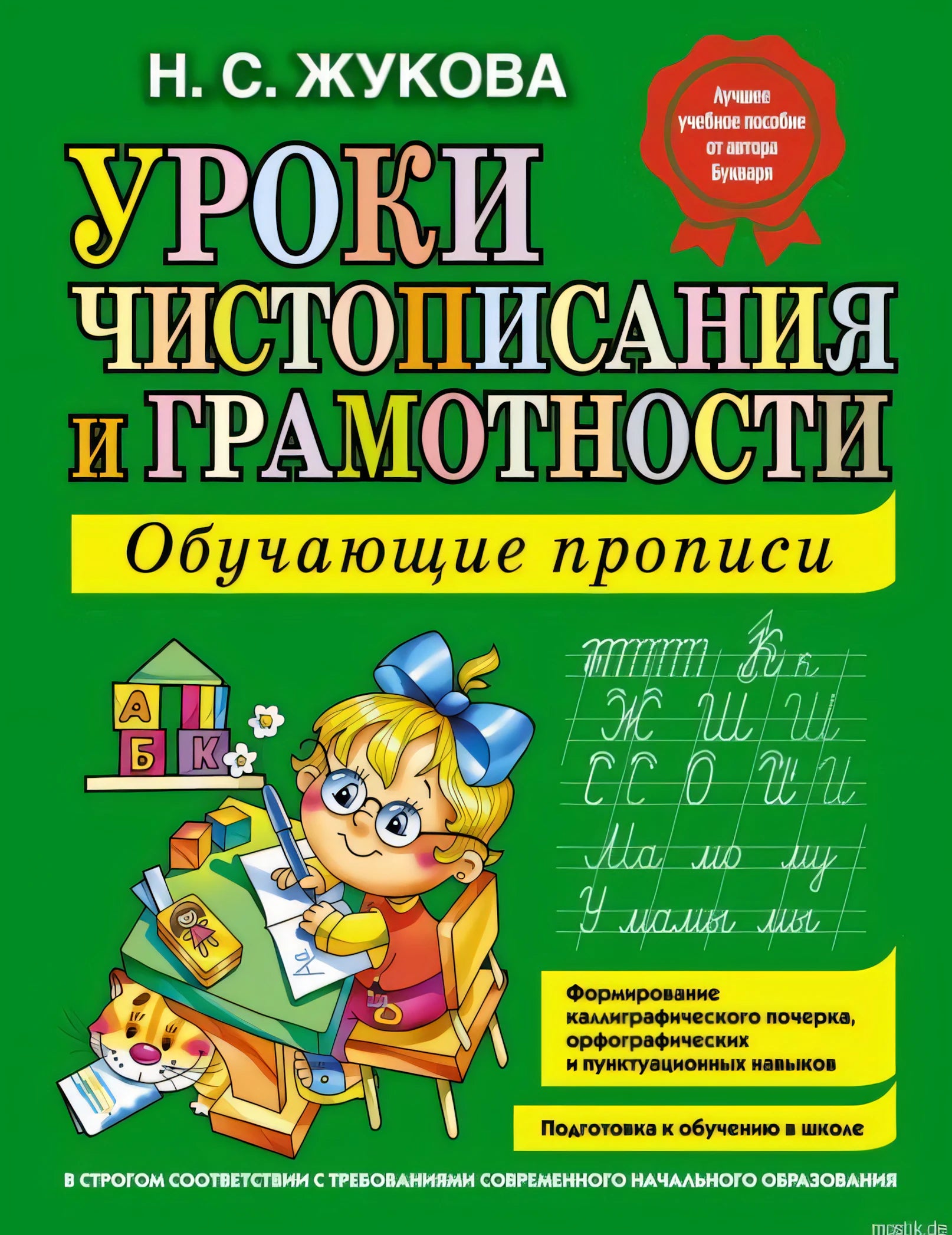
Read the instruction together and show where the child can begin. If support is needed, describe the next action rather than taking over the whole page. The relevant question is what the learner understands and can attempt with the available help, not how closely the finished sheet resembles somebody else’s work.
Keep reading and writing observations distinct. A child may enjoy identifying a familiar word while finding the written movement demanding. Noticing that difference provides a clearer basis for choosing the next activity than a single judgement about whether the child is good at languages.
Let the routine remain small enough to repeat
Choose a natural stopping point before starting: one short activity or a page section that can be revisited. The exact amount depends on the task and the child’s interest. There is no need to attach a promise about rapid progress to either book; the immediate aim is a clear and manageable shared activity.
Afterwards, record one observation and one question. Perhaps the instruction was understood, but a particular letter remained unfamiliar. Perhaps the child wanted to return to a picture. These concrete notes can support a later conversation with a tutor and help the family choose material without relying on broad labels or comparisons.